Bookkeeping
You’re Making Money. But Do You Actually Know Where It’s Going?
By BAAS Team · · 5 min read
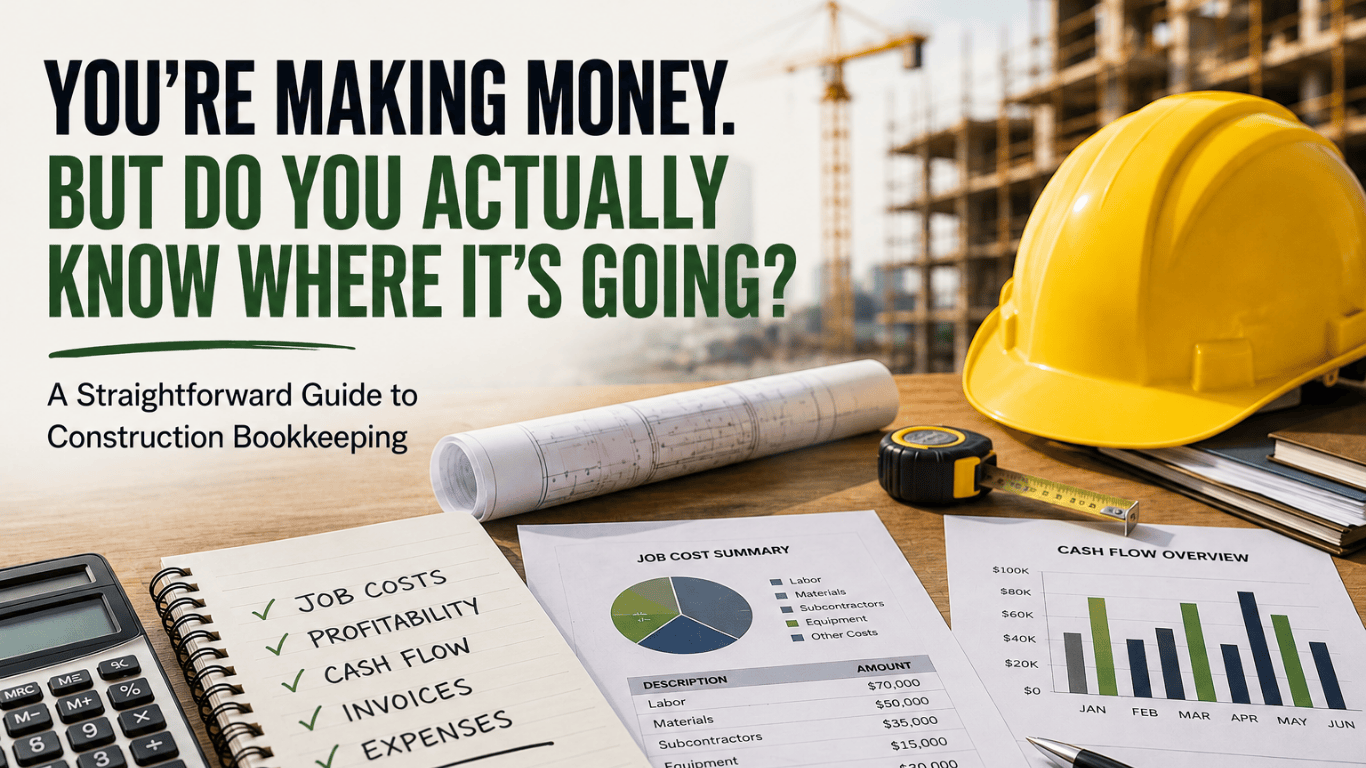
You finished the job.
The customer paid.
Your bank account has money in it.
So how much did you actually make?
If you can't answer that quickly, your bookkeeping may be telling you something important.
For a construction business, bookkeeping isn't just about keeping records for tax season. It helps you understand where your money is going, what your jobs are costing, who owes you money, and whether you're actually making money.
Let's keep it simple.
What Is Bookkeeping?
Bookkeeping is keeping an accurate record of the money coming into and going out of your business.
That includes:
- Customer payments
- Materials
- Employee wages
- Subcontractors
- Equipment
- Fuel
- Insurance
- Supplier bills
- Loans
- Other business expenses
But construction bookkeeping has another important layer:
You need to know which job those transactions belong to.
Spending $10,000 doesn't tell you much by itself.
You should know:
What was it spent on? Which project was it for? Was it part of the original estimate?
That's where proper construction bookkeeping becomes valuable.
Your Bank Balance Doesn't Tell the Whole Story
Let's say you check your business bank account and see:
$100,000
It feels good.
But that money may already have somewhere to go.
You might have:
- $25,000 in upcoming payroll
- $20,000 owed to suppliers
- $15,000 owed to subcontractors
- $10,000 in upcoming expenses
- $10,000 set aside for other obligations
That $100,000 isn't necessarily $100,000 of profit—or even $100,000 you can freely spend.
Cash and profit are not the same thing.
Good bookkeeping helps you understand the difference.
The Question Every Contractor Should Be Able to Answer
“How profitable is this job?”
Imagine you sign a contract worth $200,000.
Your project costs are:
- $70,000 in labor
- $50,000 in materials
- $35,000 in subcontractors
- $15,000 in equipment and other job costs
That leaves approximately $30,000 before other business costs and applicable taxes.
Without job costing, you might simply think:
“We landed a $200,000 project.”
With proper bookkeeping and job costing, you can see what that project is actually costing you.
That's a big difference.
What Is Job Costing?
Job costing means tracking the income and costs associated with a specific project.
For a construction business, that may include:
Labor
How much are you spending on employees working on the project?
Materials
How much are you spending on supplies and materials?
Subcontractors
How much are your subcontractors costing you?
Equipment
Are equipment rental and usage costs being properly assigned?
Other Job Costs
What other expenses are directly connected to the project?
Then you compare those costs with what you're being paid.
This helps answer one of the most important questions in construction:
Are we actually making money on this job?
What Happens When Your Books Fall Behind?
Construction owners are busy.
Customers need answers. Employees need support. Suppliers need payment. Estimates need to be prepared. Projects need to be supervised.
Bookkeeping gets pushed to tomorrow.
Then tomorrow becomes next week.
Then next week becomes three months.
That's when problems start.
You may no longer know:
- How much customers owe you
- How much you owe suppliers
- What you've spent on a project
- Whether labor costs are increasing
- Whether you're making or losing money
- How much cash you'll need next month
And the longer your books stay behind, the harder it becomes to make good decisions.
Five Things Your Construction Books Should Tell You
Your bookkeeping should give you answers—not just numbers.
1. How much money are we making?
You should have a clear picture of your revenue and expenses.
2. Which customers still owe us?
Outstanding invoices affect your cash flow.
3. Which bills do we need to pay?
Knowing what you owe helps you avoid surprises.
4. Which jobs are profitable?
Revenue alone doesn't tell you whether a project is successful.
5. How much cash will we need?
Payroll, suppliers, subcontractors, taxes, equipment, and other expenses all require planning.
If your bookkeeping can't help you answer these questions, it's worth taking another look at your accounting process.
What About QuickBooks?
Many construction businesses use QuickBooks.
That's a good starting point.
But having QuickBooks doesn't automatically mean you have good bookkeeping.
QuickBooks can only work with the information entered into it.
If transactions aren't recorded correctly, accounts aren't reconciled, or job expenses aren't properly categorized, your reports may give you a misleading picture.
Your bookkeeping process should regularly include:
- Bank reconciliation
- Credit-card reconciliation
- Proper expense categorization
- Customer invoice tracking
- Vendor bill tracking
- Payroll records
- Job costing
- Loan and equipment records
- Financial reporting
The goal isn't to have accounting software.
The goal is to have financial information you can trust.
Bay Area Accounting Solutions helps construction and trade contractors organize and understand their financial records through bookkeeping, job costing, accounts payable and receivable, payroll support, QuickBooks support, and financial reporting.
If your books are behind, confusing, or simply not giving you the answers you need, now is a good time to fix them.
Your business is too important to run on guesswork.
📞 +1 (510) 962-7300