Tax Planning
Upcoming Tax Deadlines for California Small Businesses: What to Prepare for Now
By BAAS Team · · 6 min read
Tax deadlines don't suddenly appear.
The real problem usually starts months before the deadline—when a business owner discovers that the books aren't reconciled, receipts are missing, payroll records don't match, or there isn't enough cash set aside for taxes.
For California small business owners, the months ahead are a good time to get organized before the next major tax deadlines arrive.
Here are some of the key deadlines and, more importantly, what you should be doing now to prepare.
September 15: Your Next Est"
Many self-employed individuals, business owners, and taxpayers who don't have enough tax withheld from their income make quarterly estimated tax payments.
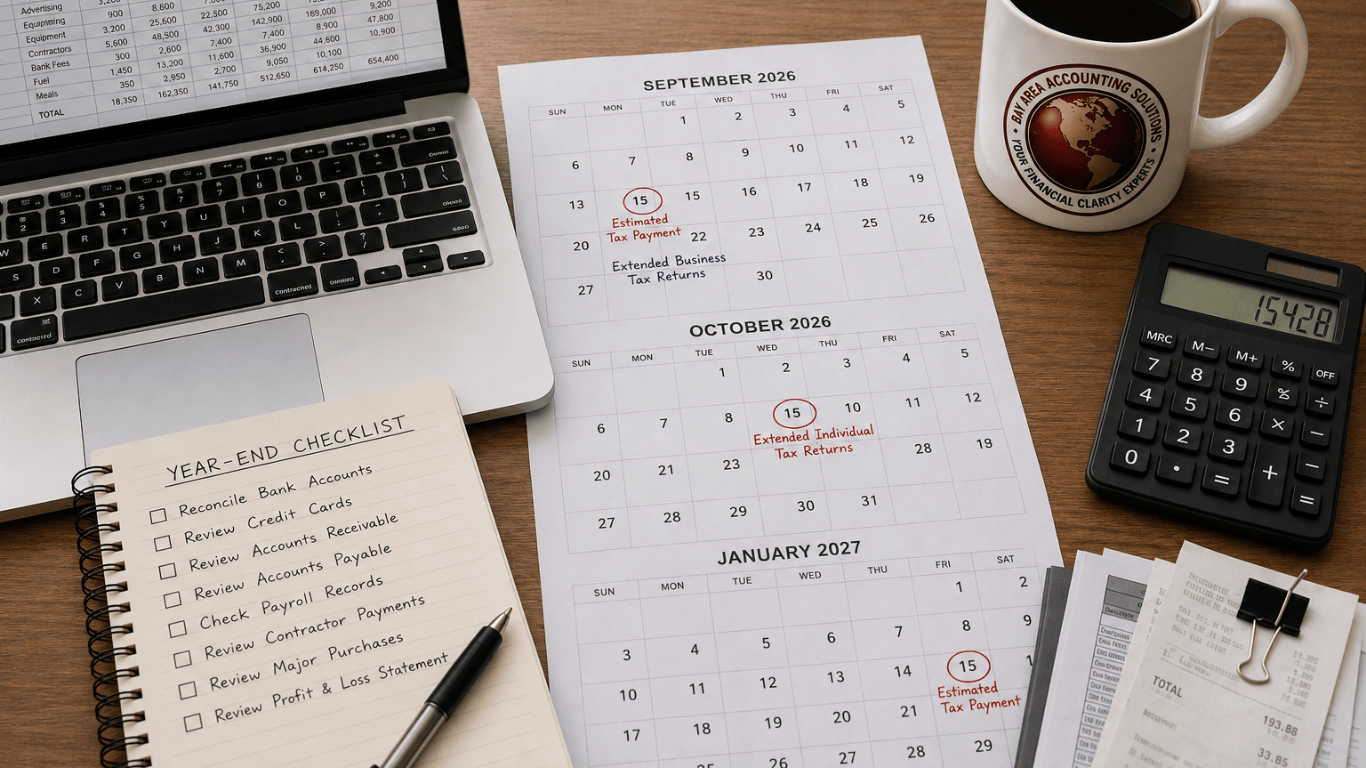
The third estimated tax payment for 2026 is generally due September 15, 2026.
If you make estimated payments, don't wait until September to find out how much you may owe.
Review your year-to-date income and expenses now. A current set of books can help you and your tax professional determine whether your estimated payments are still appropriate.
What should you review?
- Business income
- Deductible expenses
- Owner draws or distributions
- Payroll
- Major equipment purchases
- Previous estimated tax payments
- Changes in business income compared with last year
A business that is earning significantly more—or less—than expected may need to adjust its tax planning.
September 15: Extended Business Tax Returns
If your partnership or S corporation filed for an extension for its 2025 tax return, September 15, 2026 is generally an important deadline.
An extension gives you additional time to file. It does not automatically mean you can ignore the amount of tax that may be owed.
This is why waiting until September to organize your records can create unnecessary stress.
If your business received an extension, make sure your accountant has the information needed to complete the return well before the deadline.
October 15: Extended Individual Tax Returns
For individuals who received an extension to file their 2025 federal income tax return, October 15, 2026 is generally the extended filing deadline.
Many small business owners are affected by this deadline because their business income flows through to their personal tax return.
If your business is a sole proprietorship, partnership, or S corporation, your personal tax situation may be closely connected to the business.
That means your business books need to be accurate—not just for the business, but also for your personal tax filing.
And remember: an extension to file is generally not an extension to pay.
Don't Wait Until December to Clean Up Your Books
One of the biggest mistakes small business owners make is treating bookkeeping as something they only need when taxes are due.
By then, small problems can become big ones.
A missing expense from January may be difficult to track down in December. An unreconciled bank account can make it harder to determine your actual profit. Incorrectly categorized transactions can complicate tax preparation.
Instead, use the months before year-end to get your accounting records in order.
Your year-end bookkeeping checklist
Reconcile your bank accounts.
Make sure your accounting records agree with your bank statements.
Review your credit cards.
Check that business purchases have been recorded correctly.
Review accounts receivable.
Know which customers still owe your business money.
Review accounts payable.
Make sure outstanding bills and obligations are properly recorded.
Check payroll records.
Make sure wages, payroll taxes, and related expenses are recorded accurately.
Review contractor payments.
If you work with independent contractors, make sure your records contain the information needed for applicable information reporting.
Review major purchases.
Equipment, vehicles, computers, and other significant purchases may need special accounting or tax treatment.
Look at your profit and loss statement.
Don't just look at your bank balance. Know how much your business is actually earning.
January 15, 2027: The Next Estimated Tax Payment
The tax year doesn't end just because December does.
For taxpayers who make quarterly estimated payments, January 15, 2027 is generally the next estimated federal tax payment deadline.
This is another reason to start your year-end review early.
Knowing your approximate annual profit can help you plan for the tax bill rather than being surprised by it.
What Should You Do Before the Year Ends?
You don't need to wait for your accountant to ask for everything.
Start gathering your records now.
Keep your:
- Bank statements
- Credit-card statements
- Sales records
- Expense receipts
- Payroll records
- Contractor information
- Loan statements
- Equipment and asset purchase records
- Previous tax returns
- Estimated tax payment records
And don't forget about transactions that are easy to overlook.
Did you purchase new equipment? Take out a business loan? Pay a large subcontractor? Open another bank account? Hire employees? Start using a new payment processor?
These changes can matter when your financial statements and tax returns are prepared.
The Best Time to Prepare for Tax Season Is Before Tax Season
Tax preparation becomes much easier when your bookkeeping is already up to date.
Instead of spending January or February trying to reconstruct an entire year's worth of transactions, you can start the new year with organized, reliable financial records.
More importantly, good bookkeeping gives you information you can use before tax season.
You can see where your money is going. You can identify unpaid invoices. You can monitor expenses. You can understand profitability. And you can make better decisions about cash flow and taxes.
Don't let a deadline become a crisis.
If your books are behind, now is the time to catch up.
At Bay Area Accounting Solutions, we help small businesses keep their financial records organized throughout the year—not just when tax deadlines are approaching.
From bookkeeping and QuickBooks support to payroll and financial reporting, our goal is to help business owners know where they stand before a deadline forces them to find out.
Need to get your books ready before the next tax deadline? Contact Bay Area Accounting Solutions and let's get your records organized.
Tax deadlines can vary depending on your business structure, filing status, payment method, and individual circumstances. Always confirm applicable deadlines with the IRS, California Franchise Tax Board, California EDD, or your tax professional.